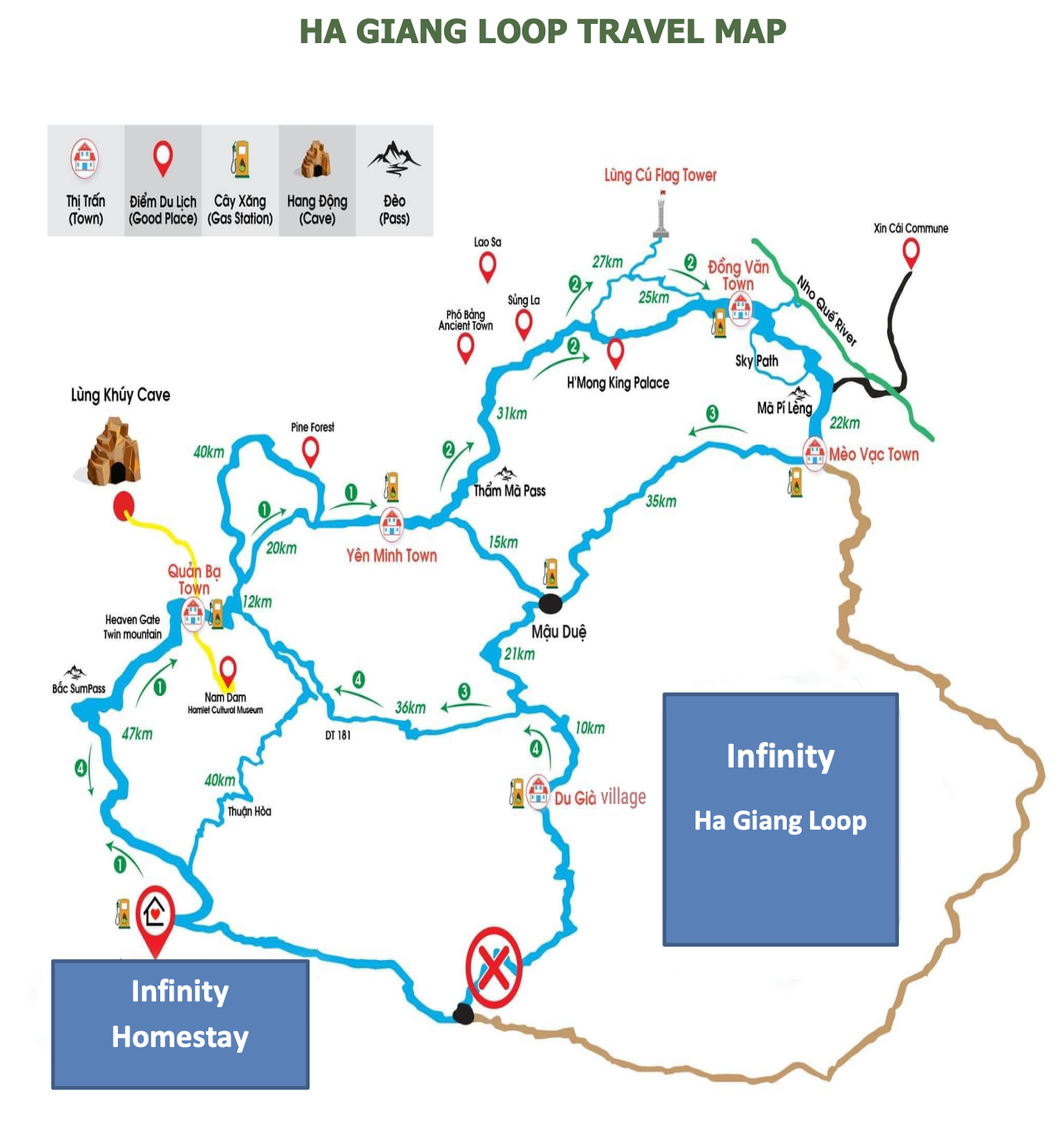
Ha Giang Loop – Price comparison
Compare Self-Driving, Easy Rider with Infinity and the average total cost with other agencies.
The key takeaway: Self-driving on the Ha Giang loop cuts costs by up to 30% compared to guided tours, with a 3-day trip ranging from $90–$120 (excluding insurance and transport). Ideal for experienced riders seeking freedom, it requires permits ($10), bike rentals ($7–$22/day), and repair budgets ($20–$50). Travel off-season (May–Sept) and dine locally to cut costs, making this iconic adventure accessible without compromising the experience.
Ever wondered why travelers often underestimate the Ha Giang Loop price? Hidden fees, permit costs, and misjudged daily expenses trip up even seasoned adventurers.
This guide cracks the code: from $10 permits to $130–$330 guided tours, we break down every expense—including motorbike rentals ($7–$22/day), homestay stays ($6–$13/night), and fuel costs ($10–$15 total).
Dive into how travel style (self-driving vs. Easy Rider), seasonality (peak vs. off-season prices), and duration reshape your budget—uncover insider tips to slash costs by 30% or more while navigating Vietnam’s legendary loop.
Spoiler: eating pho at local stalls ($1–$2) or booking off-season could save you hundreds.
- What is the real Ha Giang loop price? A complete budget breakdown
- Ha Giang Loop Tour Packages: Price Comparison For 2, 3, And 4 Days
- Budgeting for a self-driving Ha Giang loop adventure
- Your final Ha Giang loop price: tour vs. self-drive summary
- Smart budget tips and practical advice for the loop
What is the real Ha Giang loop price? A complete budget breakdown
Planning a Ha Giang Loop adventure? Costs fluctuate dramatically depending on your choices. This guide reveals the real costs to help you budget effectively.
The 3 key factors that define your budget
Three decisions shape your total expenditure: travel style, trip duration, and seasonality. Understanding these could save you hundreds of dollars—or even prevent a budget disaster.
Your travel style
Self-driving offers flexibility at $15–30/day for motorbike rentals. Fuel adds $10–15 total, but requires managing risks like repairs ($20–50) and mandatory insurance ($50–100). Guided “Easy Rider” tours start at $130, including bikes, accommodation, meals, and guides.
Infinity Loop ’ 3-days packages range from $160–200, offering peace of mind at higher costs.
Your trip duration
Short 2-day trips focus on core highlights, while 4-day journeys allow deeper exploration. Self-driving 4-day itineraries add $70–100 to lodging/fuel vs. 2-day trips. Guided tours scale proportionally—Jasmine’s 4-day package costs $57 more than their 3-day option.
The time of year
High season (October–April) demands $10–30/night for homestays. Low season (May–September) slashes rates by 30–50%, with $30–50 homestays achievable alongside lush landscapes and thinner crowds. Guided tours adjust minimally, but accommodation savings dominate.
Ready to budget? Let’s break down the costs.
Ha Giang Loop Tour Packages: Price Comparison For 2, 3, And 4 Days
Planning a Ha Giang Loop adventure? This iconic route through Vietnam’s karst mountains is a must for budget travelers, offering jaw-dropping scenery and cultural immersion. Costs vary based on trip length, transport mode, and inclusions. Here’s a breakdown to help you plan without surprises.
Easy Rider Tour Prices
Easy Rider tours (driver/guide included) range from $130 to $330, with duration and coverage affecting final pricing:
- 2-day, 1-night: Budget option ($130–$150). Covers main attractions like Quan Ba Pass and Yen Minh but skips remote areas. Best for travelers with time constraints.
- 3-day, 2-night: Most popular ($170–$220). Balances highlights including Dong Van Old Quarter, Ma Pi Leng Pass, and Lung Cu Flagpole. Includes a mix of cultural stops (House of Pao) and scenic viewpoints.
- 4-day, 3-night: Immersive experience ($200–$270). Explores hidden gems like Du Gia Village, Thai An Valley, and Nho Que River boat rides. Often includes sunrise at Vuong Family Mansion and visits to ethnic minority markets.
Car Or Jeep Tour Prices
Family-friendly car tours start at $185 USD for 3 days, 2 nights (4-seater vehicle). Shared group tours (4–6 people) keep costs lower, while private SUVs for families cost $350–$500. Dry season (September–April) pricing increases by 15–20% due to higher demand. Larger groups might opt for 7–16-seater vans at $450–$600 for 3 days.
What’s Typically Included (And What’s Not)
Clarify what’s covered before booking:
- Included:
- Local driver/guide with regional expertise
- Véhicule + fuel (Yamaha 110cc for motorbike, Toyota Innova for cars)
- Basic hotels/homestays (e.g., MeoVac at $15–$50/night; Hoang Su Phi Lodge at $55/night)
- 3 meals/day (local dishes like thang co hotpot, cha ca noodles, and street-style pho)
- Entrance fees (Lung Cu: $1.05, Nho Que boat ride: $4–$6, Dong Van Old Town: $2–$5)
- Safety gear (helmet, raincoat, first-aid kit)
- Excluded:
- Return Hanoi–Ha Giang transport ($40–$60 for buses; $120+ for private transfers)
- Travel insurance ($50–$100 recommended for medical coverage)
- Drinks and alcohol ($1–$5 for soft drinks/local rice wine)
- Tips (5–10% expected for guides/drivers)
- Upgrades (private rooms: $10–$20 extra/night)
Additional costs like motorbike repairs ($20–$50 for flats) or permit fees ($10 for a restricted area pass) aren’t included. Book early for off-peak rates and group discounts. Seasonal demand and optional add-ons can inflate costs by 10–25%—compare providers on platforms like Trekking Tour Sapa or Ha Giang Motorbike Tours to ensure transparency.
Budgeting for a self-driving Ha Giang loop adventure
For adventurous riders, the self-driven Ha Giang Loop offers freedom and savings. Here’s how to plan your budget for this iconic route.
| Cost Item | Estimated Price (VND) | Estimated Price (USD) | Notes |
|---|---|---|---|
| Mandatory Permit | ~230,000 VND | ~$10 | One-time fee; required for foreigners |
| Motorbike Rental | 180,000 – 550,000 VND/day | ~$7 – $22/day | Price depends on semi-auto vs. manual |
| Fuel | 250,000 – 350,000 VND total | ~$10 – $15 total | For 3-4 days |
| Accommodation | 150,000 – 330,000 VND/night | ~$6 – $13/night | Dorm beds in homestays; private rooms cost more |
| Food & Water | 200,000 – 250,000 VND/day | ~$8 – $10/day | Local restaurants and markets |
| Entrance Fees | ~100,000 VND total | ~$4 total | Covers Lung Cu Tower and King’s Palace |
| Potential Repairs | 450,000 – 1,200,000 VND | ~$20 – $50 | Flat tires or minor issues |
| Travel Insurance | 1,200,000 – 2,500,000 VND | ~$50 – $100 | Covers motorbike accidents and emergencies |
Breaking down the daily costs
Secure your 230,000 VND (~$10) permit before departing to avoid fines up to 10 million VND. This one-time fee requires your passport and visa, available through local agencies or Ha Giang Immigration Office. For motorbikes, choose between semi-autos (180,000 VND/day) or manuals (230,000 VND/day) at trusted shops like Strawberry House, which includes safety checks and GPS maps in rentals.
Eating like a local is the best way to save money. A delicious bowl of pho or a banh mi often costs just $1-2, keeping your daily food budget incredibly low.
Accommodation ranges from 150,000 VND/night for Meo Vac homestays to 330,000 VND/night for private rooms. Fuel costs stay low at 250,000-350,000 VND (~$10-15) for the full route, with refueling stops in Ha Giang City and Dong Van. Entrance fees total 100,000 VND (~$4) for Lung Cu Tower, King’s Palace, and the Dong Van Karst Plateau.
Budget 450,000-1,200,000 VND (~$20-50) for unexpected repairs—common issues include tire punctures (~150,000 VND) and oil changes (~100,000 VND). Travel insurance from Trekking Tour Sapa costs 1.2-2.5 million VND (~$50-100) and covers accidents, medical evacuations, and third-party liabilities. Prices rise 15-20% in peak season (October-April) due to higher accommodation rates and crowded routes, while off-season travel (May-September) offers lower prices but unpredictable weather.
Don’t Forget These Additional Ha Giang Loop Costs
Getting To Ha Giang From Hanoi
The overnight bus from Hanoi ranges from 320,000 VND (13 USD) for basic sleeper buses to 470,000 VND (19 USD) for private cabins. Most buses depart 6–9 PM, arriving after a 6–7-hour trip. Book via Trekking Tour Sapa or Baolau.com during peak seasons. Prices may rise 10–20% during holidays. Departure points in Hanoi include the Old Quarter (156 Tran Quac Khai) or Noi Bai Airport. Some buses allow motorbike transport for 300,000–600,000 VND, depending on type.
Entrance Fees For Key Attractions
Most natural sites are free, but cultural spots charge small fees:
- Lung Cu Flag Tower: 25,000 VND (1.10 USD)
- H’Mong King’s Palace: 10,000 VND (0.45 USD)
- Pao’s House: 10,000 VND (0.45 USD)
- Dong Van Old Quarter: 50,000 VND (2.20 USD) for adults, 20,000 VND (0.85 USD) for children
Total fees typically fall between 100,000–200,000 VND (4.30–8.60 USD). Some villages may request voluntary donations instead of fixed fees—50,000–100,000 VND (2–4 USD) supports local communities through handmade crafts.
Insurance And Other Unexpected Expenses
While the loop is an incredible adventure, being unprepared for small emergencies like a flat tire or unexpected medical needs can quickly add stress and cost to your trip.
Basic motorcycle coverage costs 50–100 USD, but ensure policies include your bike’s engine size and age. Budget 20–50 USD for repairs: flat tires (1.25–2 USD), oil changes (3–6 USD), or brake fixes (4–8 USD). Wet season (May–September) increases breakdown risks. Carry a repair kit and verify prices upfront to avoid overcharging. Medical budgets (50–100 USD) should cover basic needs. Always confirm policies include your bike’s engine size and comply with local requirements like an international driving permit (IDP).
Your final Ha Giang loop price: tour vs. self-drive summary
A side-by-side cost comparison
For a 3-day/2-night self-driving trip, total costs typically range from $90-$120. This includes: motorbike rental ($20-$50/day), permit ($10), fuel ($10-$15), basic accommodation ($40-$80 for 2 nights), and food ($20-$30/day). Self-driving requires meticulous planning and carries risks like unexpected repairs ($20-$50) or weather disruptions.
An All-Inclusive Easy Rider tour costs $150-$200, covering guide, bike, fuel, permits, accommodation, and entry fees. For example, Easy Rider packages often bundle essentials, eliminating last-minute hassles. Tours are pricier but guarantee safety and cultural insights.
Which option is right for you?
Choose a self-driving trip if you’re an experienced rider, budget-conscious, and seek flexibility. It’s ideal for travelers comfortable navigating winding roads and managing logistics. However, factor in potential costs for repairs, permits, and weather-related delays, especially during the rainy season (May-September).
Opt for a tour if safety and convenience outweigh price concerns. Tours cater to first-time visitors, families, or those prioritizing guided cultural experiences. While prices peak in high season (October-April), the all-inclusive model reduces financial surprises. Tours also offer access to remote routes and expert navigation, which self-drivers might miss.
Both options offer unique experiences on Vietnam’s iconic loop. Balance your budget, riding confidence, and desired level of support to make the best choice.
Smart budget tips and practical advice for the loop
How to save money on your trip
Planning a cost-effective Ha Giang Loop requires strategic choices. Travel in a group to split costs for private rooms or car tours. Opt for local street food—a bowl of pho or banh mi costs $1–$2, compared to tourist-focused restaurants charging $5–$10. Travelers save $20+ daily by sharing meals at street stalls.
- Book in advance: Peak seasons (September–November) see price hikes; secure accommodations and tours early for better rates. Many homestays like MeoVac Homestay offer 30% discounts when booked two weeks ahead.
- Travel off-season: May–September offers lower prices (up to 40% cheaper) and fewer crowds, though rain may affect road conditions. Check weather forecasts to avoid sudden storms.
- Pack smart: Bring a reusable water bottle, snacks, and a basic first-aid kit to avoid overpriced roadside purchases. Include a compact raincoat and tire repair tools for unexpected drizzle or flat tires.
What about my luggage? The big backpack question
You might wonder how to handle luggage while motorbiking. Large backpacks don’t fit on motorbikes, but nearly all guesthouses in Ha Giang City offer free, secure luggage storage. Leave your main backpack at your accommodation and pack a compact daypack with essentials (clothes, toiletries, documents) for the 3–4-day loop. Most facilities, like Jasmine Ha Giang, provide locked storage rooms monitored by staff.
This system lets you travel light without compromising security. Most travelers stash valuables like passports in hotel safes. Retrieve your stored luggage before departing for your next destination, ensuring a hassle-free experience on winding roads. For example, after exploring the Lung Cu Flagpole, you’ll appreciate having your main luggage ready for onward travel.
The Ha Giang Loop price varies based on travel style, duration, and season. Tours ($150–$330) offer convenience but less flexibility, while self-driving ($90–$120, excluding insurance/transport) demands planning yet saves costs. Prioritize safety, book ahead, and embrace local eats to maximize value on this unforgettable adventure.