For the time-constrained traveler: The Ha Giang Loop, Vietnam’s northernmost adventure, offers a 350km motorbike odyssey through the UNESCO-recognized Dong Van Karst Plateau—Southeast Asia’s second UNESCO geopark. This 3-5 day journey challenges riders with hairpin bends and jagged peaks while immersing them in ethnic minority cultures. More than a road trip, it’s a transformative experience where every twist reveals Southeast Asia’s rawest landscapes.
Is the Ha Giang Loop tour leaving you overwhelmed with conflicting advice and endless planning? For adrenaline-seekers craving raw, untamed beauty, this motorbike journey through Vietnam’s northern frontier promises jaw-dropping vistas—and logistical hurdles. Whether navigating the UNESCO-listed Dong Van Karst Plateau, conquering Ma Pi Leng Pass’ hairpin turns, or rafting the Nho Que River’s emerald waters, this 3-5-day expedition demands smart prep. From choosing between self-driving a semi-automatic bike or riding with a local “Easy Rider” to sidestepping common errors like skipping the Skywalk, unlock expert tips to transform chaos into a soul-stirring odyssey through Vietnam’s last wild frontier, where cultural encounters await.
- What is the Ha Giang Loop? an epic northern Vietnam adventure
- Planning your Ha Giang Loop tour: when to go and what to pack
- How to experience the loop: self-driving vs. easy rider
- Choosing Your Ha Giang Loop Tour: A Comparison of Duration and Companies
- A Detailed Ha Giang Loop Itinerary: Unmissable Stops And Highlights
- Essential tips for a safe and responsible journey
- Is the Ha Giang Loop worth it? A Final Verdict
What is the Ha Giang Loop? an epic northern Vietnam adventure
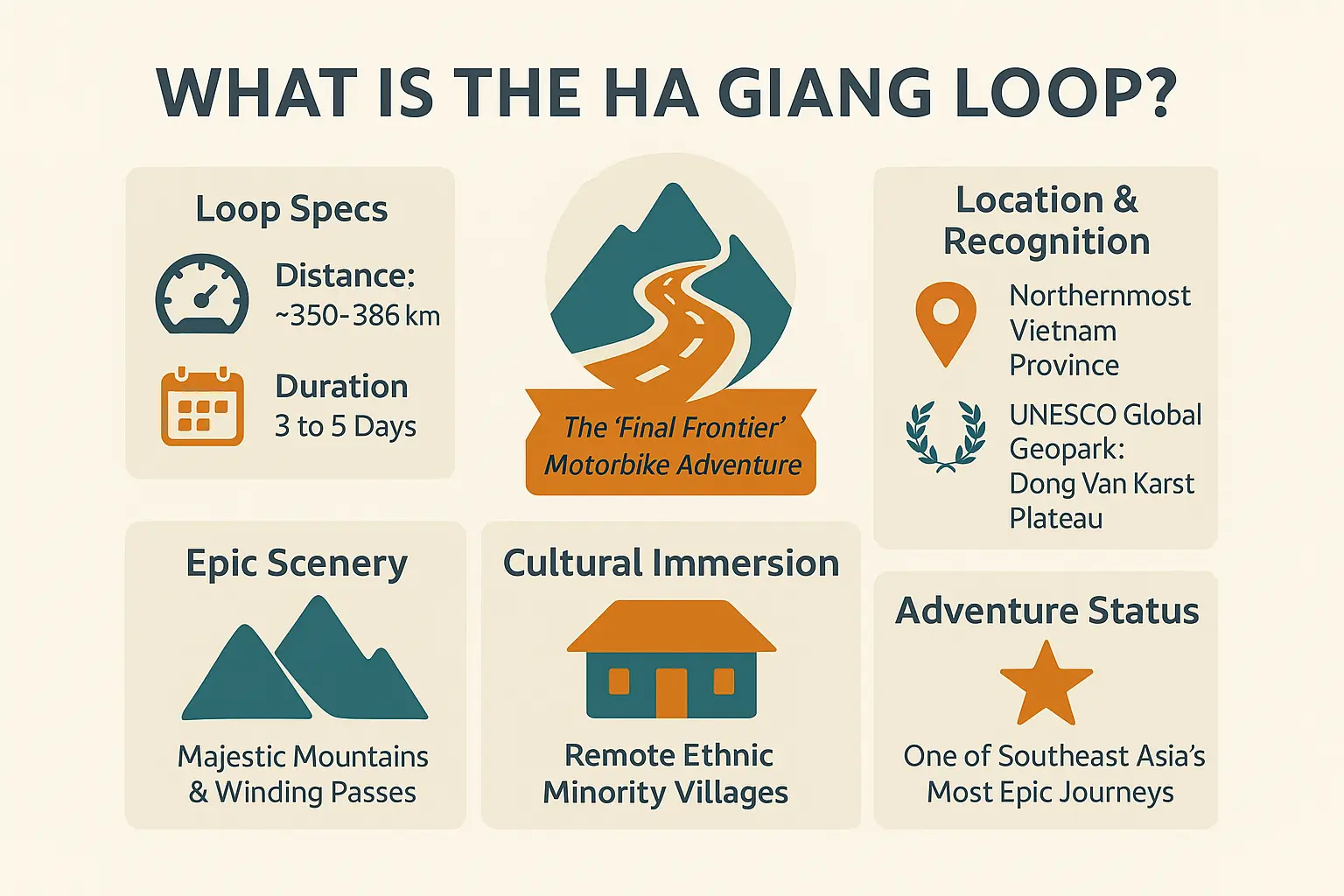
The Ha Giang Loop stands as Vietnam’s ultimate frontier for adventurous travelers, winding through jagged limestone peaks and remote ethnic villages where time seems to stand still. This 350–386 km motorbike route in northern Vietnam’s Ha Giang province offers a raw, unfiltered journey across one of Southeast Asia’s most dramatic landscapes.
Carving a path through the Dong Van Karst Plateau Geo-Park—a UNESCO Global Geopark recognized as the “second-largest karst region in Southeast Asia”—the loop follows serpentine roads that cling to cliffsides, plunging through mist-shrouded valleys and past rice terraces etched into impossibly steep slopes. As described by Andy Fine’s travelogue, this route transforms from a mere road trip into an empowering journey through Earth’s geological masterpieces.
“Often described as the ‘final frontier’ for adventurous travel in Vietnam, the Ha Giang Loop is more than a road trip—it’s an empowering journey through some of the most majestic landscapes on Earth.”
Meet Our Team Through This Ha Giang Loop Tour Video :
Traversing Vietnam’s northernmost reaches, the loop delivers heart-pounding elevation changes across Heaven’s Gate Pass, the vertigo-inducing Ma Pi Leng Pass hugging the turquoise Nho Que River, and the 1,600m-high Dốc Chín Khoanh pass with its legendary nine hairpin bends. Beyond geological wonders, the route immerses visitors in Hmong and Dao communities, where traditional textile markets and stilt-house villages reveal a world far removed from modern Southeast Asia.
Whether navigating the plateau’s labyrinth of limestone towers or witnessing harvest seasons paint the terraces in golden hues, the Ha Giang Loop delivers an experience where natural grandeur and cultural authenticity converge—a testament to why seasoned travelers rank it among their most transformative adventures.
Planning your Ha Giang Loop tour: when to go and what to pack
The best time to ride the loop
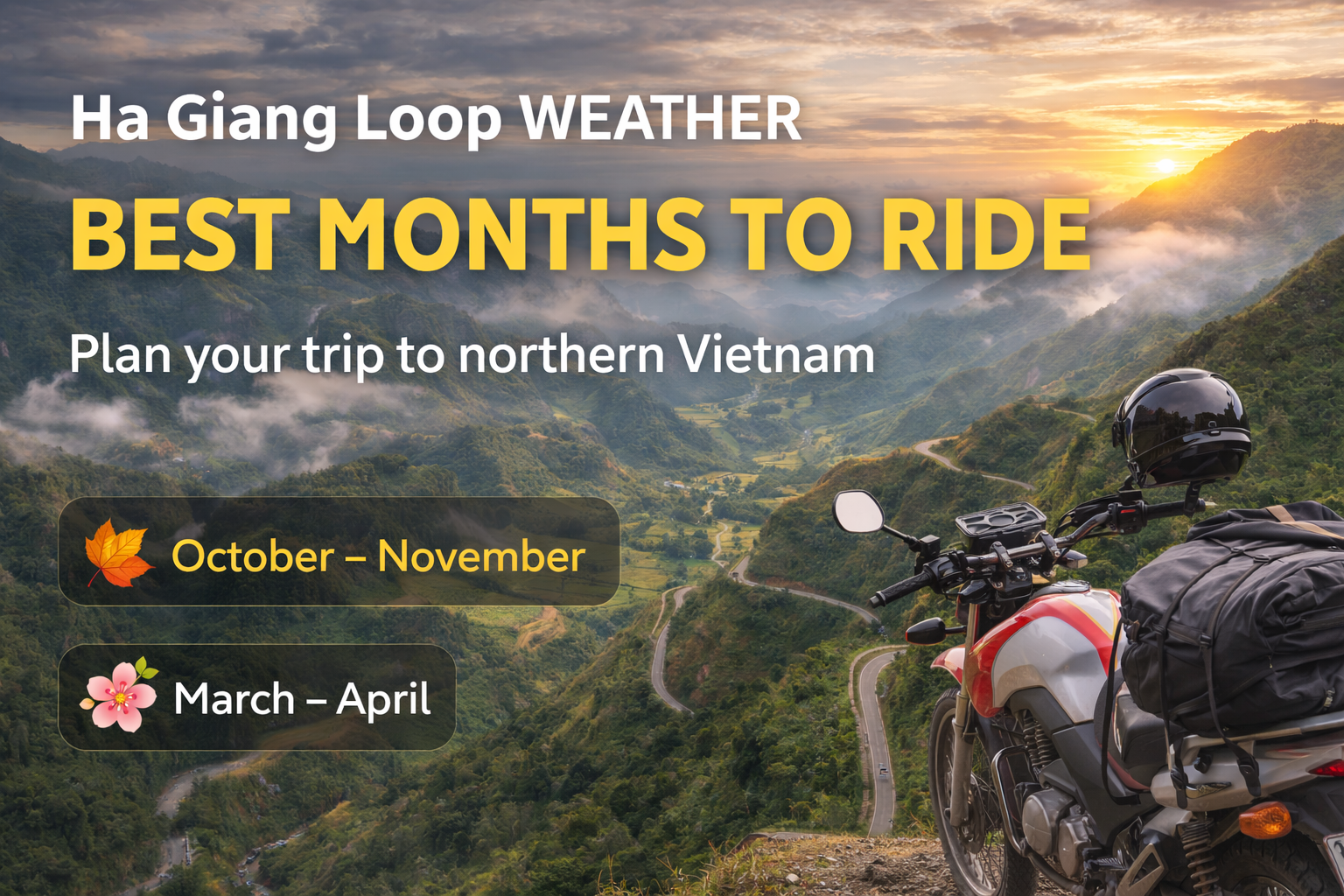
Timing your Ha Giang Loop tour is crucial for an unforgettable adventure. The dry season from December to April offers optimal road conditions and clearer skies, making it the most recommended period. March and April balance comfortable temperatures—23-26°C highs and 13-19°C lows—with manageable rainfall. October also offers mild weather, but mountain conditions remain unpredictable. Fog, rain, and wind can occur year-round, so preparedness is key. Winter nights can be brutally cold, with temperatures dipping as low as 3°C in December, demanding warm layers. Avoid June and August, the rainiest months with 355-410mm of rain, and December, which sees “frisquet” conditions (12-17°C) despite lower rainfall.
Your essential packing list
For a comfortable and safe journey, pack light but smartly. Most large luggage can be stored in Hanoi or Ha Giang, allowing you to travel with a compact backpack secured to your motorbike. Prioritize versatility—temperatures fluctuate dramatically between sunlit peaks and misty valleys.
- Layered clothing: T-shirts, a sweatshirt or fleece, and thicker socks for cold nights and higher altitudes. Add thermal base layers in winter and moisture-wicking fabrics for summer.
- Rain gear: A waterproof jacket is non-negotiable. Rain pants, gloves, and shoe covers are highly recommended.
- Sun protection: Sunglasses with UV protection and polarized lenses, plus SPF 30+ sunscreen. High-altitude exposure intensifies UV risks.
- Sturdy footwear: Closed-toe shoes or boots with ankle support for rocky terrain. Waterproof hiking boots are ideal for muddy sections.
- Small medical kit: Include antiseptic wipes, pain relievers, anti-diarrheal meds, anti-nausea tablets, and bandages. Pack a basic repair kit—spare inner tubes, tire levers, and chain lubricant.
- Dramamine: For the winding 6-7 hour bus journey from Hanoi to Ha Giang, where sharp turns and steep drops test even seasoned travelers.
- Cash: Carry enough Vietnamese đồng—ATMs are scarce outside main towns. Budget for snacks, lodging, and unexpected expenses like road tolls.
Don’t forget a power bank for electronics—remote stretches limit charging opportunities. For winter trips, add a balaclava and thermal socks. Verify your travel insurance covers motorbike incidents and emergency medical evacuations before departure.
How to experience the loop: self-driving vs. easy rider
Option 1: Self-driving the loop
Self-driving the Ha Giang Loop offers total freedom but demands skill. Roads are narrow, winding, and exposed, with loose gravel and uneven surfaces. A manual or semi-automatic motorbike (e.g., Honda Blade 110cc or XR 150) is recommended for better control on steep climbs.
An International Driving Permit (IDP) is legally required for foreigners. While some travelers skip it, having one ensures insurance coverage and avoids penalties. Beginners should practice locally before attempting the loop.
Option 2: The “Easy Rider” experience
Drawbacks include fixed itineraries with pre-planned stops. Costs are higher due to guide fees, but traveler reviews highlight its value for first-timers.
Easy Rider tours provide a stress-free alternative. A local guide drives the motorbike, allowing you to focus on majestic landscapes and photography. Benefits include expert navigation, cultural insights, and reduced safety risks. This option suits travelers without motorbike experience or those prioritizing comfort.
Other alternatives
Military-style open-air jeeps now traverse the loop, introduced by Mad Monkey in 2025. These 4×4 vehicles tackle rugged terrain, offering panoramic views. A 3-day jeep tour starts at $298, ideal for families or older travelers. Hybrid jeep-motorbike tours ($310+) provide varied perspectives for groups.
Overnight buses from Hanoi to Ha Giang remain budget-friendly for solo travelers, though full-loop bus tours are discouraged due to reckless driving.
Cost comparison
- Self-driving: $15-20/day for bikes + $10-15 fuel
- Easy Rider: $35-50/day (driver, bike, fuel)
- Jeep tours: $199+ for 2-day trips, $480+ for 4-day
Safety considerations
Both options require helmets and sturdy footwear. For self-driving, inspect the bike’s condition before departure. Easy Rider passengers should verify their driver’s experience on mountain passes like Ma Pi Leng. Weather impacts safety – rain reduces grip, fog obscures cliffs. Carry waterproof gear and a navigation app like Maps.me.
Making the choice
Choose self-driving if:
- You have prior motorbike experience
- You prioritize flexibility
- You seek independent exploration
Opt for Easy Rider if:
- You lack motorbike confidence
- You want local cultural insights
- You prefer a relaxed adventure
Jeep tours suit those avoiding two wheels but wanting off-road immersion. All options access iconic sites like Dong Van plateau and Lung Cu’s northernmost point.
Choosing Your Ha Giang Loop Tour: A Comparison of Duration and Companies
Planning a Ha Giang Loop tour means balancing time, budget, and travel style. This 386-kilometer route through Vietnam’s northern mountains blends dramatic karst peaks, serpentine roads, and cultural encounters with Hmong and Tay communities. Most choose 3, 4, or 5-day itineraries. Shorter tours often leave visitors wanting more, as shared on travel forums:
“A common regret among travelers is choosing a shorter tour. Adding just one extra day can transform a rushed trip into a deeply immersive exploration of Ha Giang’s hidden gems.”
Duration shapes your experience of this bucket-list adventure, especially in a region recognized by UNESCO for its Dong Van Karst Plateau.
Comparing Tour Durations
| Feature | 3-Day Tour | 4-Day Tour | 5-Day Tour |
|---|---|---|---|
| Pace | Rushed (129 km/day) | Recommended (97 km/day) | Relaxed (77 km/day) |
| Highlights | Covers main route but skips Skywalk, Nho Que River. | Includes Ma Pi Leng Pass, Nho Que River, photo stops. | Deeper exploration with trekking, village visits, Skywalk time. |
| Best For | Travelers with tight schedules. | Balanced option for most travelers. | Photographers, slow travelers, culture enthusiasts. |
| Potential Downsides | Feels rushed, misses spontaneous discoveries. | Packed schedule with limited downtime. | Higher cost and time investment. |
The table above reveals how duration shapes your journey. For example, 3-day tours prioritize speed, often skipping the iconic Skywalk and Nho Que River boat rides. Four-day trips strike a balance, with time to explore Dong Van’s French fortress or Lung Cu’s northernmost point. Five-day adventures allow detours to hidden gems like Du Gia Waterfall or immersive homestays in Hmong villages. As one reviewer noted, “The extra day lets you breathe and connect with locals over rice wine instead of rushing to the next checkpoint.” Longer tours also open doors to lesser-known markets like Meo Vac’s Sunday bazaar, where ethnic minorities trade textiles and handicrafts.
Popular Tour Operators and What to Expect
Operators like Mad Monkey, Cheers Hostel / Jasmine Tours, and Mr. Hung Tourism cater to different preferences. Mad Monkey’s 3-4-day tours ($125–$279) emphasize social impact, including Skywalk access and bamboo raft rides. Their Jeep option (2025 launch) targets travelers prioritizing comfort. Cheers Hostel suits younger travelers with a party vibe—karaoke nights and group bonding around “happy water” (local rice wine). Mr. Hung Tourism, Tripadvisor’s top-rated (4.9/5), offers personalized tours with bilingual guides and family-run homestays (3.4–7.5 million VND for 3–4 days). Travelers praise their guides like Tam and Mr. Ming, who blend safety with storytelling, ensuring “the road becomes a classroom,” as one guest put it.
When booking, verify inclusions: motorbike, fuel, accommodation, meals, and guides. Self-guided motorbike rentals ($15–$50/day) demand vigilance—hidden costs like insurance for accidents or breakdowns often make guided tours more practical. Medium notes guided tours simplify logistics, especially on technical routes like Ma Pi Leng Pass. For budget travelers, self-guided trips average $75 for 4 days, but require planning for lodging and meals. Guided packages like Mad Monkey’s Jeep option ($279) bundle essentials—3 nights’ lodging, meals, and activities—offering value for first-timers. Jasmine Tours’ 3-day self-guided packages start at $147 (3.4 million VND), while private SUV tours reach $325 (7.5 million VND) for 4 days. Self-rental options, though cheaper, demand vigilance: semi-automatic bikes (110cc) cost $7/day, but upgrading to manual (150cc) adds $23/day. Always confirm insurance coverage, as repairs for accidents or breakdowns can quickly outweigh savings.
A Detailed Ha Giang Loop Itinerary: Unmissable Stops And Highlights
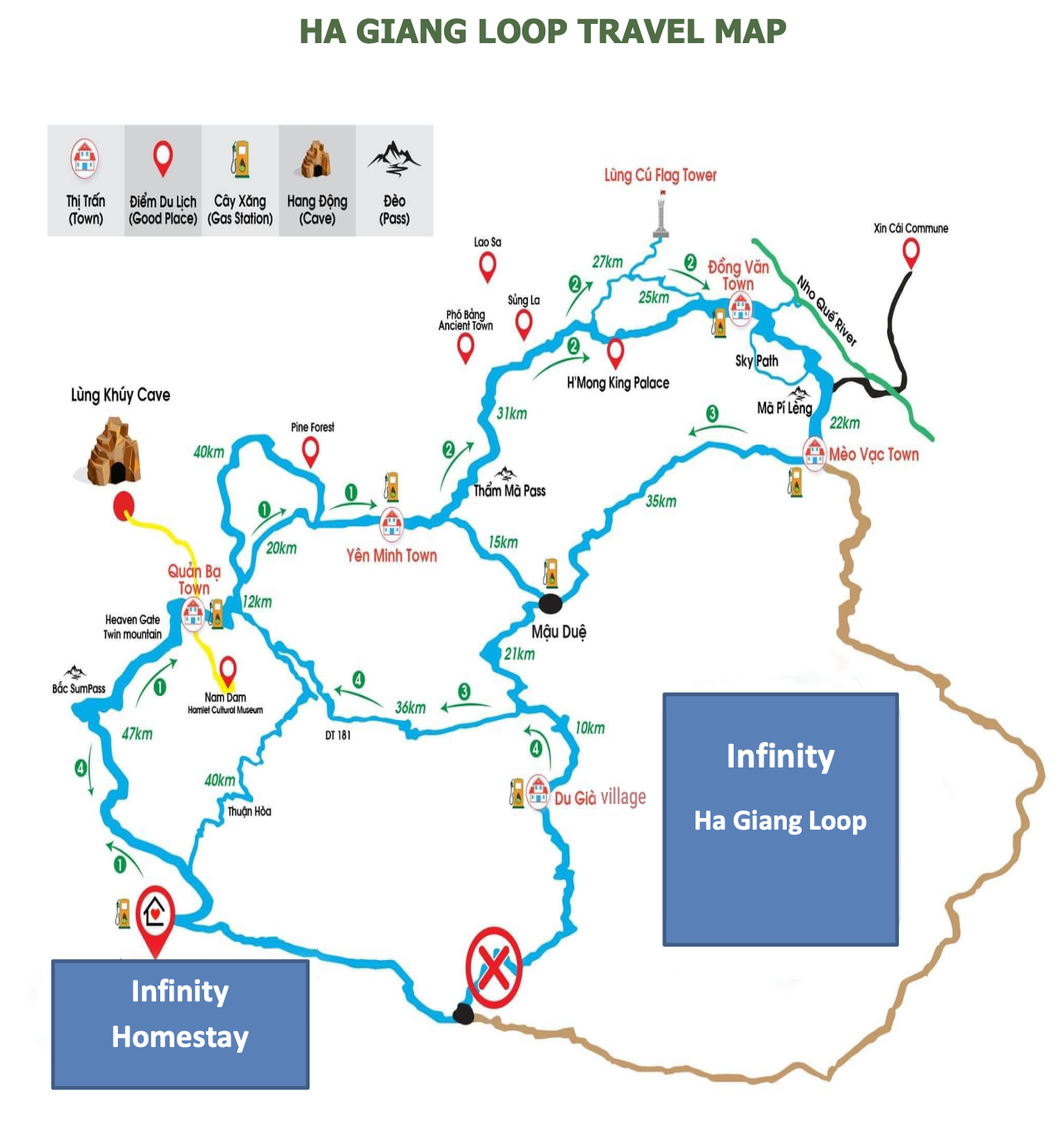
Day 1: Ha Giang To Yen Minh (~100 Km)
The adventure begins in Ha Giang City, where riders pick up motorbikes or join guided tours. The route ascends toward the UNESCO Dong Van Karst Plateau, passing Heaven’s Gate (Quan Ba Pass) for panoramic views of terraced fields and peaks. Nearby, the Twin Fairy Hills—two conical karst formations—create a surreal landscape. Lung Khuy Cave offers a brief detour with towering stalactites and eerie acoustics.
Day 2: Yen Minh To Dong Van (~90 Km)
Day two immerses you in the Dong Van Karst Plateau UNESCO Global Geopark, a stark, dramatic terrain. The serpentine Tham Ma Pass challenges riders with 700m elevation gain and hairpin turns. Pause at Sung La Valley to admire Hmong villages nestled among peaks. History enthusiasts might detour to the Opium Palace, a Hmong warlord’s former estate. The day ends in Dong Van, a colonial-era town with a vibrant Sunday market.
Day 3: Dong Van To Du Gia Via Meo Vac (~110 Km)
The Ma Pi Leng Pass is the loop’s highlight. Nicknamed the “King of Passes,” this 11-year engineering feat (1959–1970) clings to cliffs 2,000 feet above the Nho Que River, as detailed in a travelogue. The road is a narrow ribbon carved through sheer rock, flanked by plunging gorges. Stop at the Skywalk (a Mad Monkey tour highlight) for breathtaking views. Later, a boat trip on the Nho Que River through Tu San Canyon—Asia’s deepest—contrasts the day’s adrenaline.
Day 4: Du Gia To Ha Giang (~80 Km)
The final day slows the pace, showcasing Du Gia’s terraced valleys and the Du Gia Waterfall, where riders can swim in turquoise pools. The return leg to Ha Giang reveals last-minute vistas of rice paddies and stilted homes. Before finishing, revisit the journey’s highlights:
- Ma Pi Leng Pass: The undisputed king of Vietnam’s mountain passes.
- Nho Que River Boat Trip: Gliding through Southeast Asia’s deepest canyon.
- Dong Van Karst Plateau: Riding through a UNESCO-listed geological wonder.
- Tham Ma Pass: The iconic winding road from travel photos.
- Lung Cu Flag Tower: Marking Vietnam’s northernmost point.
This 4-day route blends natural beauty with cultural encounters, from Hmong homestays to shared shots of local rice wine. For 2025, Mad Monkey’s Jeep tours offer a less intense alternative. Prioritize safety: check road conditions, carry travel insurance, and savor the journey—every stop matters.
Essential tips for a safe and responsible journey
Staying safe on the road
Conquering the Ha Giang Loop’s winding roads demands vigilance. Roads are narrow, steep, and often obstructed by ongoing construction, requiring defensive driving. Use your horn strategically in blind corners to alert oncoming traffic. Motorcyclists should prioritize helmets meeting safety standards—local guides emphasize this as non-negotiable.
The infamous “Happy Water” (locally brewed corn alcohol) is a cultural highlight but poses risks. With 35-45% ABV, it’s potent. Refusing politely is acceptable if driving the next day; however, accepting a small amount shows respect. Many travelers regret overestimating their limits, leading to impaired judgment on hairpin turns.
Travel insurance covering motorbike riding (including 125cc+ engines) is critical. Policies like GobyAVA’s Tourist Card or AVAnture’s plan protect against accidents or medical emergencies. Over 70% of travelers overlook this step, exposing themselves to financial risks.
Logistics and practicalities
Reaching Ha Giang from Hanoi typically involves a 6-7 hour sleeper bus. Operators like Bằng Phấn offer budget-friendly options starting at $13, while Daiichi Travel’s VIP cabin buses ($18) include reclining beds and Wi-Fi. Book online via Baolau.com or directly through providers to secure motorcycle transport slots, which cost $12-$24 extra depending on bike type.
Hostels such as Mad Monkey simplify logistics, organizing tours, luggage storage, and hotel transfers. Their packages often bundle accommodation, meals, and motorbikes. For DIY travelers, verify bike condition daily—check brakes, tire pressure, and fuel levels before each leg of the 386km route.
Responsible travel and cultural etiquette
Support local economies by purchasing handicrafts from roadside vendors or homestay owners. Always ask permission before photographing residents, respecting their privacy. Cultural immersion includes participating in Happy Water toasts, but balance enthusiasm with responsibility.
- Always wear a helmet. It’s the law and it saves lives.
- Don’t drink and drive. Be especially careful with the local “Happy Water”.
- Get proper travel insurance. Check that it covers motorbike riding.
- Check your bike daily. Brakes, tires, and fuel level before setting off.
- Drive defensively and slowly. The views are the goal, not speed.
By prioritizing safety, cultural respect, and logistical preparation, travelers maximize their chances of a memorable, incident-free adventure through Vietnam’s northern highlands.
Is the Ha Giang Loop worth it? A Final Verdict
The Ha Giang Loop is more than a journey—it’s a transformative adventure etching itself into your memory. Despite its challenges, this route through Vietnam’s northern highlands offers unmatched rewards: staggering landscapes and deep cultural connections.
Yes, the roads are narrow and winding. Yet every turn reveals vistas redefining beauty: jagged karst peaks, mist-shrouded valleys, and the UNESCO-protected Dong Van Plateau. As one traveler notes,
“The Ha Giang Loop is not just a trip, it’s a transformative experience. It will challenge you, mesmerize you, and leave you with memories that will last a lifetime.”
Its magic lies in duality. Steep climbs and unpredictable weather test your resolve, but reaching landmarks like Heaven’s Gate or Lung Cu Flag Tower amplifies your sense of achievement. Encounters with Hmong and Tay communities—sharing meals, traditions, and laughter—add profound meaning.
Physical demands exist, yet rewards outweigh them. Navigate hairpin bends on “Happiness Road,” drift down the Nho Que River beside Asia’s deepest canyon, or savor Vietnamese coffee in remote villages. These moments make the Loop a once-in-a-lifetime adventure, reshaping how you see the world.
So, is it worth it? Unequivocally, yes. Pack your courage, embrace the unknown, and let the Ha Giang Loop inscribe its stories into your heart. The road awaits.
The Ha Giang Loop—a transformative journey through rugged terrain, stunning vistas, and cultural encounters—is worth every challenge. As one traveler notes, “It will challenge you, mesmerize you, and leave you with memories that will last a lifetime.” Discover why this northern Vietnam odyssey is Southeast Asia’s ultimate road trip. (60 words)
FAQ
What’s the price range for the Ha Giang Loop Tour?
The Ha Giang Loop Tour typically costs between $150–$300 per person for organized multi-day packages. Self-driving options start around $250,000 VND (≈$11) per day for a semi-automatic motorcycle, with additional costs for fuel (~$5–$10/day) and accommodations ($15–$30/night). Full-service tours (including transport, lodging, meals, and a guide) often range from $150 for 3-day tours to $250+ for 4-5 day itineraries with premium inclusions like boat trips and cultural visits.
Is the Ha Giang Loop a recommended adventure?
Absolutely. Travelers describe it as “life-changing” and “the ultimate Southeast Asian road trip.” The Loop delivers jaw-dropping landscapes—UNESCO-listed karst peaks, serpentine mountain passes, and remote ethnic villages—paired with a deep cultural immersion. While physically demanding, the raw beauty, local hospitality, and sense of freedom make it worth the effort. Many regret rushing through 3-day tours, emphasizing that 4-5 days allow a richer, more immersive experience.
What’s the ideal tour option for the Ha Giang Loop?
For most, a 4-day guided tour with an “Easy Rider” (local driver) strikes the perfect balance of comfort and adventure. Operators like Mad Monkey or Cheers Hostel offer well-organized itineraries with homestays, cultural stops, and hidden gems like the Skywalk viewpoint. Self-driving suits experienced riders seeking independence, while 3-day tours work for tight schedules. Jeep tours (new in 2025) cater to non-riders, though buses are discouraged due to risky driving.
What safety considerations should I know about the Ha Giang Loop?
The Loop’s narrow, winding roads require caution. Key risks include unpredictable weather (fog, rain), loose gravel, and inexperienced drivers. Always wear a helmet, check brakes/tires daily, and avoid alcohol before riding (“Happy Water” is potent!). Secure travel insurance covering motorbike accidents (especially for bikes over 125cc). For self-driving, an International Driving Permit (IDP) is legally required, though often overlooked. Stick to daylight hours and budget $20–$30 for emergency repairs.
How far does $100 USD go in Vietnam?
$100 USD covers 6–10 days for a budget traveler. Daily expenses include $5–$10 for street food, $8–$15 for basic dorms, and $1–$2 for local transport. In Hanoi, it buys 20–30 street meals; in rural Ha Giang, 40+ meals. Splurging on tours or mid-range hotels slices this to 3–5 days. Always carry cash—ATMs are scarce beyond major towns.
Can you travel Vietnam on a $1000 budget for two weeks?
Yes! $1,000 comfortably covers two weeks for a mid-range traveler. Budget $300–$400 for the Ha Giang Loop (tour or self-driving), $200–$300 for Hanoi/Ho Chi Minh stays, $200–$250 for food/transport, and $100–$200 for activities like Halong Bay cruises or Mekong Delta tours. Splurge on a few local experiences, and still have room for unexpected costs. Solo travelers can cut spending by 20–30% with budget accommodations.
What’s the daily riding schedule like on the Ha Giang Loop?
Most itineraries involve 5–7 hours of riding per day, covering 77–129 km depending on duration. 3-day tours push 7–8 hours/day, often feeling rushed. 4-day trips allow 5–6 hours/day with more stops, while 5-day adventures include 4–5 hours/day, plus time for treks or village visits. The final day typically has lighter riding (3–4 hours) to ease back into city life.
Is $1000 sufficient for the Ha Giang Loop road trip?
Yes, $1,000 covers a 4–5 day self-driving adventure, including $250–$300 for the motorcycle, $100–$150 for fuel/accommodation, and $100–$150 for food/activities. Full-service tours (guide, lodging, meals) at $250–$300 leave room for side excursions. Factor in $100–$200 for transport to Ha Giang (night bus from Hanoi at $15) and contingency funds.
Which is more challenging to learn, Korean or Vietnamese?
Vietnamese uses a Latin-based script (with accents) but features six tones that drastically alter meaning, making pronunciation tricky. Korean employs Hangul (easy-to-learn alphabet) but has complex grammar rules, honorifics, and vowel sounds unfamiliar to English speakers. Both require 600+ hours to reach basic fluency, but Vietnamese tones pose immediate conversational hurdles, while Korean’s socio-linguistic nuances challenge long-term mastery. Context matters: Vietnamese suits travelers; Korean benefits from pop culture immersion (K-dramas, music).